
Understanding B2B E-Commerce
B2B e-commerce, or business-to-business e-commerce, refers to commercial transactions conducted between businesses via the internet. This model is distinct from the more commonly known B2C (business-to-consumer) model, as it focuses on wholesale transactions rather than retail sales. In the digital landscape, B2B e-commerce plays a crucial role in streamlining operations, enhancing efficiency, and fostering robust market growth.
The significance of B2B e-commerce has surged in recent years, driven by the need for companies to optimize their purchasing processes. Businesses can leverage online platforms to access vast product catalogs, compare prices, and establish sustainable supplier relationships, resulting in significant cost savings and increased operational efficiency. Furthermore, B2B e-commerce facilitates 24/7 access to services, enabling businesses to manage transactions at their convenience.
One of the primary differences between B2B and B2C e-commerce lies in the nature of their target audiences. While B2B transactions typically involve bulk purchases and longer sales cycles, B2C is focused on individual customers making smaller purchases. Additionally, B2B e-commerce platforms often include features such as bulk ordering, custom pricing, and account management, which cater specifically to business needs.
Establishing a B2B e-commerce platform presents myriad benefits, including improved customer experience, personalized marketing opportunities, and enhanced scalability. Such platforms allow businesses to automate processes, manage customer relationships more effectively, and gain insights through data analytics. By harnessing these technological advancements, companies can remain competitive and responsive to market demands, ultimately paving the way for sustained success in the dynamic realm of e-commerce.
The Concept of a Shopify Theme for B2B
A Shopify theme tailored for B2B (business-to-business) commerce is fundamentally different from traditional e-commerce themes, as it addresses the unique needs and functionalities of businesses engaging in wholesale transactions. A well-designed B2B theme is characterized by various design elements and functionalities that enhance user experience and streamline operations for businesses.
One of the primary distinguishing features of a B2B Shopify theme is its focus on bulk purchasing options. This can include functionality that allows customers to order large quantities of products at once, as well as tiered pricing structures based on order volumes. Such capabilities are essential for businesses that typically engage in large-scale purchasing, differentiating B2B themes from conventional retail-oriented themes.
Another critical aspect is the inclusion of a robust customer management system. B2B themes often incorporate features for customer account management, enabling companies to view their order history, manage various shipping addresses, and track invoices. This is vital for maintaining long-term relationships and providing personalized customer service. Furthermore, functionalities such as customer-specific pricing and customizable checkout processes enhance the purchasing experience for business customers, who generally require more tailored solutions than typical consumers.
Additionally, a B2B Shopify theme should prioritize mobile responsiveness, as many business purchases occur on-the-go. Ensuring compatibility with multiple devices facilitates ease of access for users who may be comparing products or placing orders from different locations. Finally, the aesthetic elements of a B2B theme, such as a professional color palette and easy navigation, help maintain a credible image in the eyes of potential clients.
In summary, creating a Shopify theme for B2B purposes requires the integration of specialized functionalities and design elements that cater specifically to the operational needs of businesses, distinguishing it from standard e-commerce solutions.
Key Features of an Effective B2B Shopify Theme
When developing a B2B Shopify theme, several key features are essential to cater to the unique needs of business customers. One of the primary necessities is bulk ordering capabilities, which allow businesses to place large orders efficiently. This functionality not only enhances the purchasing experience but also saves time and reduces the risk of errors that can occur with individual item entries. A robust system for handling multiple units per product is crucial when managing high-volume transactions.
Another significant aspect is customer segmentation. B2B customers often possess diverse requirements, and tailored experiences can significantly improve user satisfaction. Integration of features that enable users to be grouped based on various criteria—such as previous purchases, order frequency, or customer size—can optimize the shopping experience. Tailored pricing, discounts, and product recommendations based on these segments can greatly enhance customer loyalty and drive sales.
Furthermore, effective product catalog management is vital for a B2B Shopify theme. Businesses typically require detailed product information, including bulk pricing tiers, lead times, and availability data. A comprehensive product management system streamlines inventory control and ensures that businesses can access the most pertinent information with ease. Enhanced search features and filtering options enable users to find the products they need quickly, improving overall efficiency.
Lastly, seamless integration with third-party business tools is essential for a B2B Shopify theme. This includes compatibility with customer relationship management (CRM) systems, enterprise resource planning (ERP) software, and various payment gateways. Such integrations facilitate smooth operations and a cohesive workflow, ensuring that businesses can manage their orders and customer data efficiently. Ultimately, these features collectively contribute to an effective B2B Shopify theme designed to meet the specific needs of business customers.
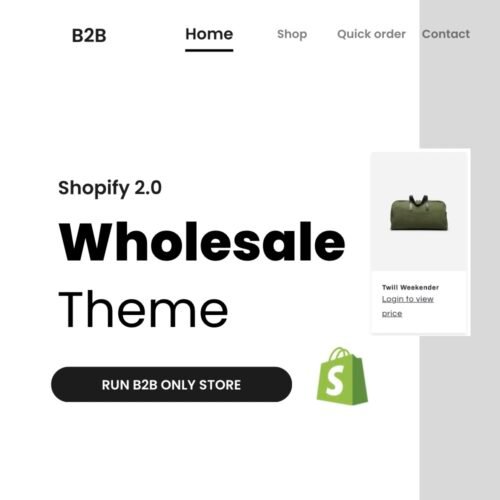
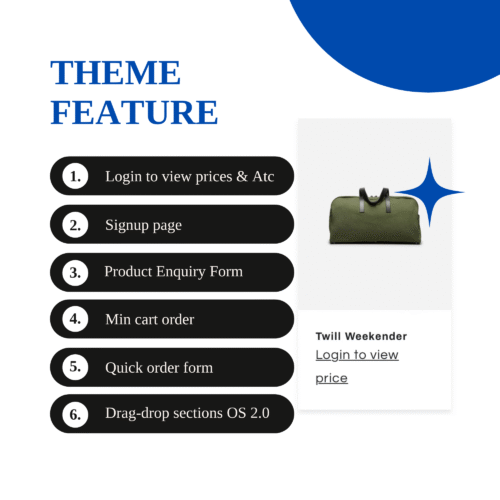
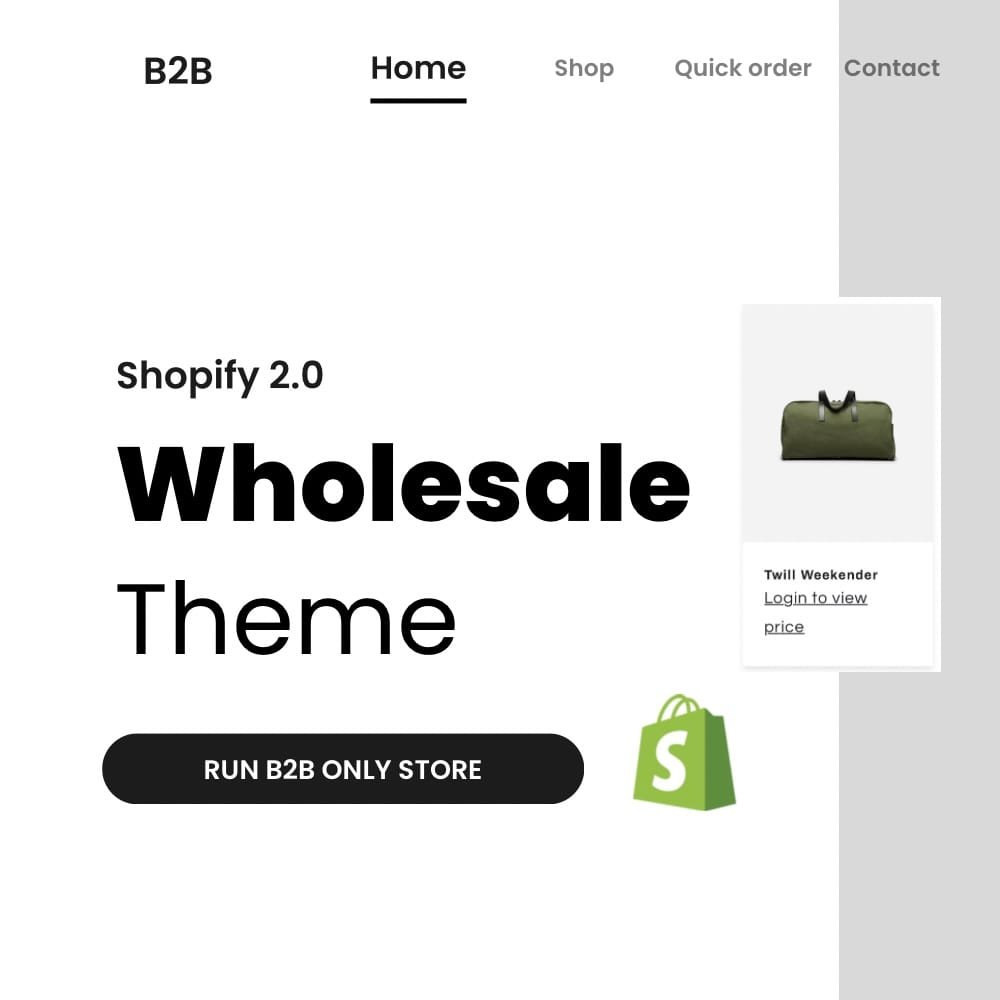
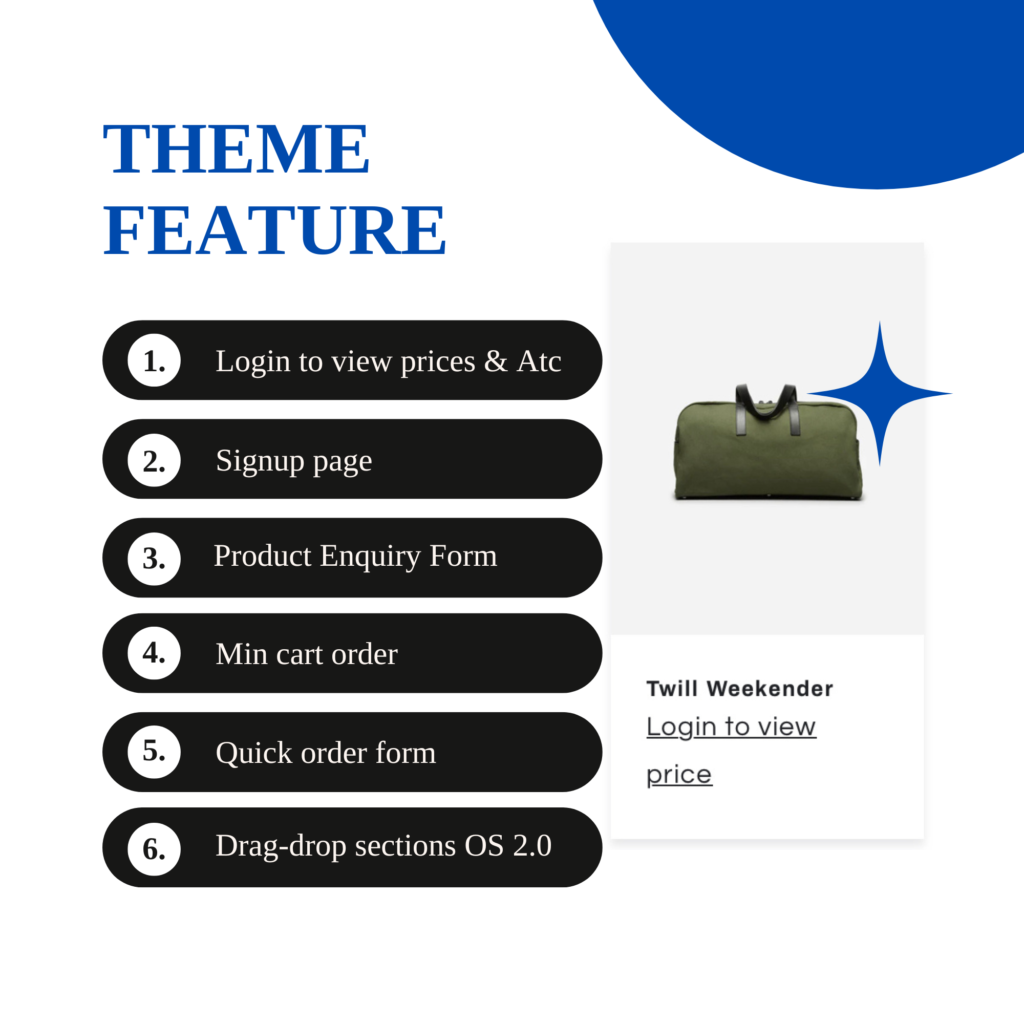
B2B Wholesale Shopify Theme – Launch Your B2B Store in 5 Minutes
Designing the User Interface (UI) for B2B Customers
Creating an effective user interface (UI) specifically for B2B customers requires a focus on usability and accessibility to ensure a seamless shopping experience. Unlike B2C platforms, B2B e-commerce often involves bulk purchases, complex ordering systems, and unique customer requirements that necessitate a tailored approach to design.
First and foremost, understanding the target audience is crucial. B2B customers typically seek efficiency, clarity, and ease of navigation. To achieve this, designers should prioritize a clean and straightforward layout. A well-structured navigation menu that categorizes products clearly can significantly enhance the user experience, enabling customers to quickly find what they need without unnecessary distractions.
Moreover, accessibility should be a core principle of the B2B Shopify UI design. This implies ensuring that the website is usable for all individuals, regardless of ability or context. Incorporating features such as keyboard navigation, screen reader compatibility, and adjustable text sizes can make the interface more inclusive, fostering a sense of equity among users.
Visual elements, including color schemes, typography, and imagery, play a vital role in enhancing usability. A harmonious color palette that aligns with the brand identity while maintaining contrast can help guide users through the interface smoothly. Typography should be legible and professional, as it contributes to the overall aesthetic of the platform, which in turn impacts the trustworthiness perceived by potential clients.
Lastly, it’s essential to conduct usability testing with actual B2B customers. Feedback from real users offers invaluable insights into how well the interface meets their needs and expectations, allowing for iterative improvements. By implementing these best practices, businesses can create a UI that not only meets the requirements of B2B customers but also provides a pleasant and efficient shopping experience.
Integrating Payment Solutions and Security Measures
In the realm of B2B e-commerce, selecting the right payment solutions is crucial for facilitating efficient transactions. Unlike traditional retail transactions, B2B transactions often involve higher values, repeated orders, and unique payment terms. As such, integrating robust payment solutions can significantly enhance the user experience and streamline the purchasing process. Among popular choices, payment gateways such as PayPal, Stripe, and Authorize.net stand out due to their comprehensive features tailored for business buyers. These platforms not only support various payment methods, including credit cards and e-checks, but also accommodate invoicing and subscription billing, essential for B2B interactions.
Moreover, the importance of incorporating security measures cannot be overstated. As B2B transactions can involve sensitive financial data, it is paramount to implement strong security protocols. Utilizing SSL certificates is fundamental to encrypt data during transmission, helping to protect confidential information from potential breaches. Additionally, compliance with the Payment Card Industry Data Security Standard (PCI DSS) is a necessary requirement for businesses handling credit card transactions. Following these guidelines ensures that both buyers and sellers feel secure throughout the transaction process.
Furthermore, integrating two-factor authentication (2FA) can further enhance security, making unauthorized access significantly more difficult. This added layer of protection is especially vital when dealing with transactions involving substantial sums of money. By prioritizing these security measures, B2B merchants can instill confidence in their clients and foster long-term relationships built on trust. Following best practices in payment solutions and implementing rigorous security protocols, businesses can create a seamless and secure shopping experience, encouraging buyers to engage confidently in their purchasing endeavors.
Optimizing the Theme for Search Engines
In the contemporary digital landscape, search engine optimization (SEO) plays a crucial role in a Shopify B2B theme, facilitating improved visibility and driving organic traffic. To enhance your theme’s search engine performance, it is vital to implement effective SEO strategies that encompass thorough keyword usage, compelling meta descriptions, and meticulous content structuring.
First and foremost, keyword research lies at the heart of effective SEO. Identifying relevant keywords that potential customers are using to search for products or services within your niche is essential. These keywords should be strategically integrated into your product titles, descriptions, and category pages to increase the likelihood of ranking higher in search engine results. Utilizing long-tail keywords can be particularly beneficial for targeting specific search intents, thereby attracting qualified leads.
Moreover, crafting engaging and concise meta descriptions is necessary. A well-written meta description not only summarizes the page content but also serves as an invitation to users in search results. It should be succinct, clearly communicating what a user can expect, while incorporating primary keywords organically. Aim for a character count between 150 to 160 to ensure the entire description displays on search engine result pages.
Furthermore, structuring your content properly impacts how search engines index your site. Utilizing header tags (H1, H2, H3) assists in organizing your content, making it easier for search engines to understand the hierarchy of information. It’s advisable to include relevant keywords in these headings while ensuring they are informative and maintain readability for users.
Incorporating alt text for images is another essential optimization step. Alt text should describe images effectively, include relevant keywords when applicable, and enhance accessibility for users with visual impairments. In addition, utilizing internal linking can guide visitors to other relevant sections of your site, increasing their engagement and the overall SEO standing of your Shopify B2B theme.
Testing and Launching Your B2B Theme
Before launching your B2B Shopify theme, it is essential to undertake a thorough testing process to ensure that all functionalities operate seamlessly and that the user experience is optimized. This phase encompasses various testing methodologies designed to identify and rectify potential issues, thereby enhancing the performance of your theme.
One of the first steps in this testing phase is to conduct unit testing. This form of testing focuses on individual components of the theme, assessing them in isolation to verify their functionality. By ensuring each element functions correctly, you can identify any coding errors early, thereby streamlining the overall development process. Additionally, integration testing is crucial; it evaluates how well the various components of your theme work together. This includes checking for compatibility with Shopify apps that may be crucial for your B2B operations.
Usability testing is another vital aspect. It involves real users navigating your theme to gauge their experience. Gathering feedback from these users will provide invaluable insights into the effectiveness of your theme’s design, layout, and functionality. Pay attention to user interactions, identifying any areas that may cause confusion or hinder the purchasing process.
Beyond testing functionalities, performance testing should not be overlooked. This assesses the loading speed and responsiveness of your theme across various devices and platforms. A slow-loading site can lead to high bounce rates, negatively affecting your sales and SEO rankings. Tools like Google PageSpeed Insights can help analyze and report on performance metrics.
Once testing is complete, planning your launch phase is equally crucial. Ensure that you have a marketing strategy in place so that potential customers are aware of your new B2B Shopify theme launch. Communication with existing clients about the new features and improvements is also essential, as they can provide support during this transition. Coordinating promotional activities at launch can help create excitement and drive traffic to your newly launched store.
Ongoing Maintenance and Updates
Maintaining a B2B Shopify theme is crucial for ensuring a seamless and secure online shopping experience. Regular updates not only enhance the aesthetics and functionality of the website but also play a vital role in safeguarding it against potential security threats. One of the primary reasons for ongoing maintenance is to keep pace with evolving e-commerce standards and market trends. As consumer behaviors shift and technology progresses, your Shopify theme must adapt accordingly to stay competitive.
In addition to security updates, which are essential to protect sensitive customer information and transactions, it is important to regularly refresh content and features to maintain user engagement. Upgrading design elements, implementing new functionalities, and optimizing performance can significantly enhance user experience and lead to higher conversion rates. Failing to do so may result in outdated features, which could turn potential customers away.
Best practices for maintaining your B2B Shopify theme include scheduling regular check-ups and updates at least every quarter. During these reviews, evaluate both the backend functionality and the front-end design. Consider utilizing automated tools for monitoring the site’s performance, and engaging with analytics to gain insights into customer interactions. Ensure that your dependencies, such as apps and third-party integrations, are also up-to-date, as outdated components can destabilize your site.
Another effective strategy is to stay informed about the latest trends in e-commerce technology and adapt your theme accordingly. Following industry leaders, subscribing to relevant publications, and participating in professional forums can provide valuable insights for future enhancements. By prioritizing ongoing maintenance and updates for your B2B Shopify theme, you create a resilient e-commerce platform capable of adapting to challenges and seizing opportunities in the dynamic world of online retail.
Success Stories: Examples of B2B Shopify Themes in Action
Many businesses have turned to B2B Shopify themes to enhance their operations, streamline processes, and deliver a superior experience to their customers. Among these success stories is the renowned office supply company, OfficeLand, which transitioned from a traditional sales model to an online platform using a customized B2B Shopify theme. By leveraging features such as segmented pricing and bulk ordering, OfficeLand saw a 40% increase in sales within the first year of launching their new site. This shift not only improved their customer engagement but also simplified order management, allowing them to process orders more efficiently.
Another striking example is that of GreenCrafters, a sustainable product supplier. They adopted a B2B Shopify theme that integrated with their inventory management system, enabling real-time stock updates. The seamless integration resulted in a 30% reduction in order fulfillment time, as customers could easily see which products were available for immediate shipment. Additionally, GreenCrafters benefited from robust analytics tools included in the theme, giving them insights into customer behavior and preferences. This data-driven approach facilitated tailored marketing strategies, enhancing customer retention.
A further successful implementation can be seen with TechDistributor, a wholesaler of electronic goods. By implementing a scalable B2B Shopify theme, they not only redefined their online storefront but also refined their purchasing process. Features such as tiered pricing for loyal clients and customizable product catalogs enabled them to cater to various clientele seamlessly. Ultimately, TechDistributor experienced a remarkable growth of over 50% in new client acquisition, significantly enhancing their market share. These examples underscore the transformative potential of B2B Shopify themes in driving business success across diverse sectors.